The Person Sitting Next to You

I first met Jesse Middleton in the late spring of 2010 at a startup event hosted by Business Insider titled Startup 2010: The Mobile Revolution. At the time I did not know anyone else in the startup community, and so I mostly kept to myself. Jesse and I happened to sit at the same table for lunch and started talking. At the end of the event, we agreed to meet up the following week at the once-hot startup meetup spot, The Coffee Shop.
I had moved into WeWork Soho with my partners at Simande by that time. Jesse was working on his startup at Dogpatch Labs, a startup incubator run by the VC firm Polaris Venture Partners, located just down the street from the cafe we had met near Union Square.
Jesse and I continued to meet for coffee and at startup events such as NY Tech Meetup throughout the year, quickly becoming close friends. Later that year, Jesse told me about a new startup idea called Guyhaus that he wanted to pursue. I did not have much money at the time, but I asked him if I could invest to support him. I told my landlord and new friend, Adam, about Jesse’s idea and that I planned to invest. He immediately asked if he could join and invest alongside.
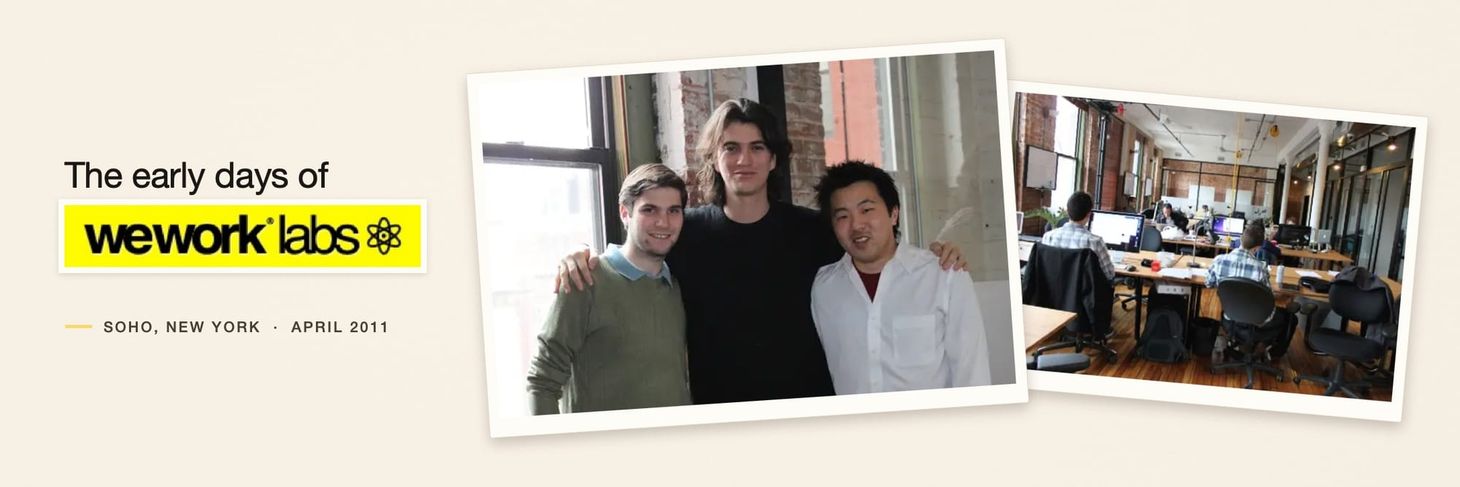
In early 2011, Adam asked me to bring Jesse by WeWork. We all got along famously. I remember Adam asking a lot of questions about Jesse’s workspace at Dogpatch Labs, though I suspect he was mostly curious why Jesse chose to work there instead of WeWork. The discussion began to focus on the New York City startup community, and what we thought was missing. That list eventually became the basis for the founding of WeWork Labs.
About a month after those conversations, on April 1, 2011, we opened the first WeWork Labs space at 154 Grand Street with Adam and his co-founder, Miguel.
An idea we needed ourselves
Jesse and I were working on our own companies. We understood the appeal of having a desk and an affordable place to work, but we also wanted to be around people with different skills and similar ambitions. Someone who could offer an honest opinion, help you think through a decision, and empathize with you during the extreme ups and downs.
We put up a post on a website that I was running with my partners at Simande, aptly called We Are NY Tech. You’ll find hundreds of interviews with people in the New York City startup community, the vast majority of whom I had the privilege of meeting for coffee at Café Select. That’s a story for another post, though. On the site we invited people to apply and then interviewed the founders who applied in the newly created WeWork Lounge on the ground floor of WeWork Soho.
Jesse and I were incredibly lucky to have extraordinary supporters and friends who helped us think through the concept and what WeWork Labs should be (and not be). Friends such as Cindy Gallop, who had built and led BBH’s U.S. business, were instrumental in helping us take on this challenge. Having someone with her experience lend her time and expertise to help us meant a lot. There were many others over the years, and they helped me see firsthand what a community is and what it can accomplish as it grows.
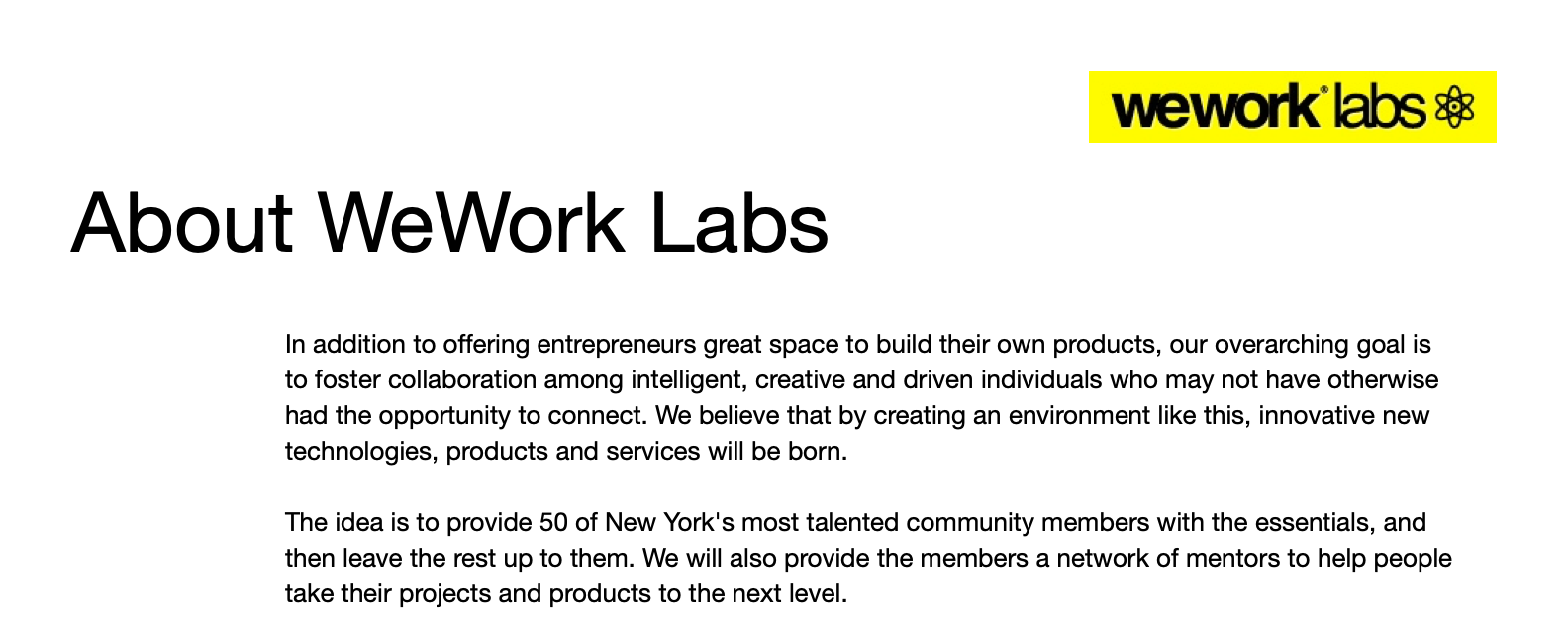
Excerpt from the original WeWork Labs overview
The original April 2011 overview for Labs captured our initial vision well. We wanted to bring together people who might otherwise never have met. There would be startup founders, designers, developers, marketers, and others with an entrepreneurial spirit, along with a network of mentors.
We did everything we could to keep the costs low. A dedicated desk was $250 a month, with month-to-month memberships. Jesse and I relentlessly sought sponsors to help keep costs down and support educational events, hackathons, and company demos. We wanted founders to be able to spend their time and money building their companies, while having access to people who could help them along the way.
Looking back through the coverage from that time, I found a 2012 interview where I said, “If we have extra resources, like money, we just stick it back into the community.” That pretty much captures how we thought about it. Keeping the space affordable and helping the founders was where we wanted those resources to go.
The more time we spent with the founders, the more we realized how often they were running into the same issues. For someone starting a company for the first time, there are so many things you don’t yet know to ask about, do, or avoid. In other words, you don’t know what you don’t know.
Employee benefits, insurance, legal work, and accounting can all feel far removed from the product you’re excited to build. But they are part of running a company, and finding out too late that you need a particular kind of insurance or legal advice can be costly.
The sponsors who shared their expertise and provided services, often for free or at a large discount, became an integral part of the community. The people behind those partnerships became friends. Jen from WilmerHale, Andrea from Pepsi, Stephan and Aya from Bing, Monica from JWT, David from TriNet, Tuan and Shai from SVB, and so many more over the years. Their devotion, partnership, and friendship truly made those times feel special.
Learning from one another
The members also taught one another. In a December 2011 interview with The Next Web, I talked about the Skillshare classes we hosted and a WeWork Labs town hall where I commented that “I loved seeing just how adamant the group was on setting up classes to teach each other.”
I think that can be easy to forget when we talk about supporting entrepreneurs. There is plenty of attention on introductions to investors and fundraising. Those things matter, but there is also value in helping someone work through one of the many problems that founders face on any ordinary day.
You may not know what you don’t know, however, that doesn’t mean the person sitting next to you doesn’t know. Many of the founders in WeWork Labs grew close. That made it easier to ask an honest question, share a lesson from something that hadn’t worked, or get another perspective.
That Next Web piece also mentioned companies such as Fitocracy, Handshake, Consmr, and CityPockets. They were working in different areas, from fitness to business software, but I saw how much they benefited from their relationships with each other. The range of experience in the room was part of what made the idea work.
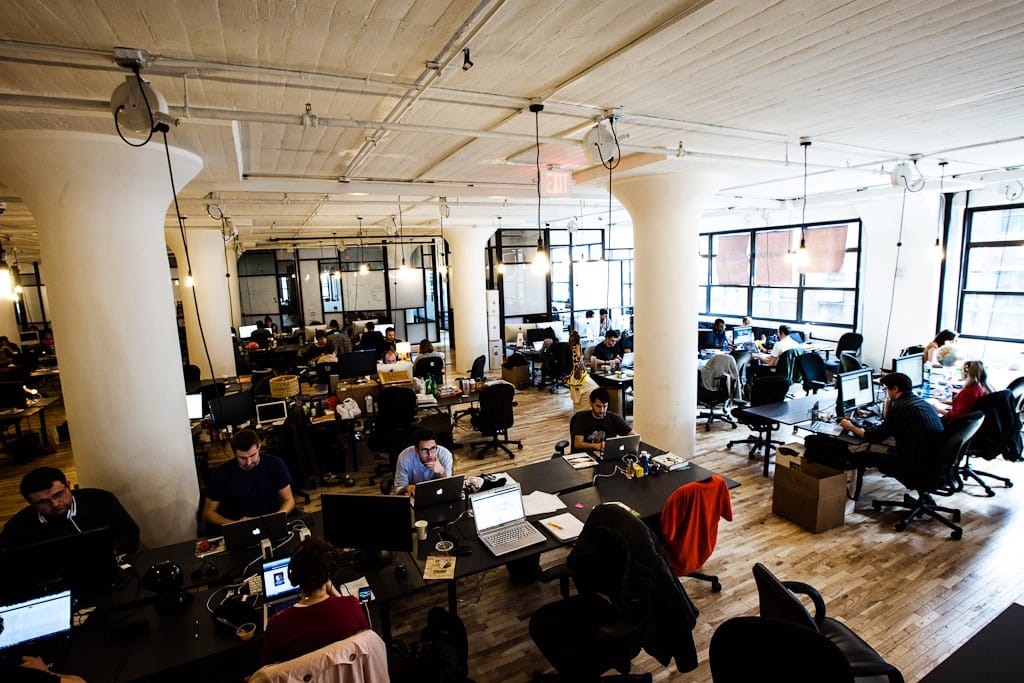
Our second location, WeWork Labs Varick Street in New York
Finding ways to encourage casual conversation and time together was also an important discovery. I can’t say for certain that the free beer WeWork Labs introduced into the WeWork community led to more serendipity, but I don’t think it hurt.
What I carry into DNK
As WeWork Labs grew, I had the chance to meet early-stage founders across the U.S., Europe, Asia, and Australia. One of the things that stayed with me was how much we all had in common. The markets and languages changed, but many of the challenges were familiar.
Building a company asks a lot of its founders. You have to find customers, hire the right people, and learn how to operate in each market. I’ve come to appreciate how much easier it is when you can turn to people who have faced those challenges before.
I see that at DNK today. We’re building for Japanese real estate with teams in Tokyo and Seoul. Tak Naito’s experience as an investment manager in Japan helps our product and engineering teams understand the data our customers rely on and the decisions behind it.
Our customers also know things we don’t. When they show us how their teams use property management reports, we get a better understanding of what matters to them and where we can make their work easier.
There is also a personal side to building a company. It helps to have someone to talk to when things are hard, someone who understands why a setback feels so big. And when something finally goes well, it’s better to celebrate with people who understand how much work it took to get there.
I try to make time for other founders, whether that means an introduction, a conversation over coffee, or listening when things aren’t going to plan. I know from experience how much those small moments can matter.
I’m grateful to Adam and Miguel for giving Jesse and me the chance to build WeWork Labs with them, and to the members, sponsors, mentors, and friends who made it what it became.
In 2010, I went to that Business Insider event not knowing anyone. A conversation over lunch became a friendship, and that friendship helped bring a much larger group of people together. I hope WeWork Labs helped other founders find the kind of support I found in that community.
Bonus for those that made it to the end: WeWork Labs Harlem Shake (2013)


Matthew Shampine - Co-founder & CEO of DNK Newsletter
Join the newsletter to receive the latest updates in your inbox.